Roller Blinds for Chartwell Homes
Nothing on the range earns its keep like a roller blind. One fabric, one tube, one decision that matters: how much of the paddock do you want to see at four in the afternoon?
Keep the view, kill the glare — or go completely dark
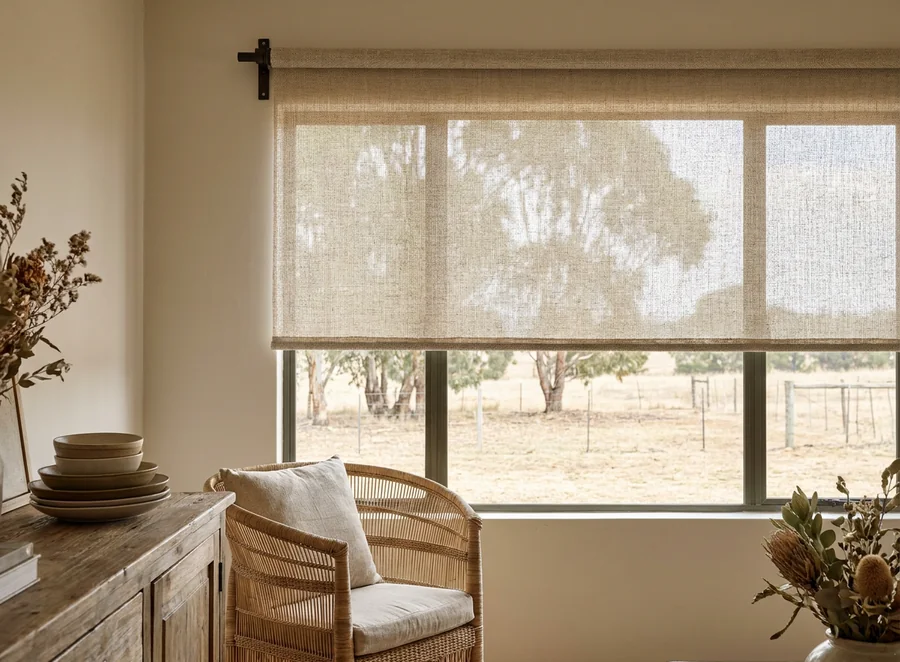
Stand in a Chartwell lounge at four on a summer afternoon and the problem introduces itself. The west sun comes across the paddocks low and hard, the television disappears, and closing curtains on that view feels like a crime. Sunscreen roller fabric is the answer most living rooms out here land on: an open weave — 3% or 5% — that takes the sting and the UV out of the light while the fence line, the horses and the gum trees stay visible through it. One honest caveat: after dark the effect flips, and the lit room becomes the visible side.
Bedrooms want the opposite. A highveld winter morning is bright by half past five, and blockout fabric is the only thing that genuinely holds it back. Which is why so many Chartwell windows end up carrying a double roller — blockout and sunscreen sharing one bracket, each with its own job, swapped with a flick rather than a refit.
- Sunscreen weaves hold the paddock view while cutting glare, heat and UV
- Blockout gives bedrooms and media rooms real dark, even at midsummer sunrise
- Double rollers stack both fabrics on a single bracket — no second install later
- Cassette pelmets close the tube away and match your window frames
- Chain drive with a child-safe tensioner fitted as standard — or no chain at all, motorised
Not sure which wall is the problem? Nothing in the Way, our free Chartwell Light Journal, maps where the sun actually lands on a north, west, east and south elevation out here, month by month — and says plainly what we'd fit on each, catch included.
Three metres of glass is where the engineering starts
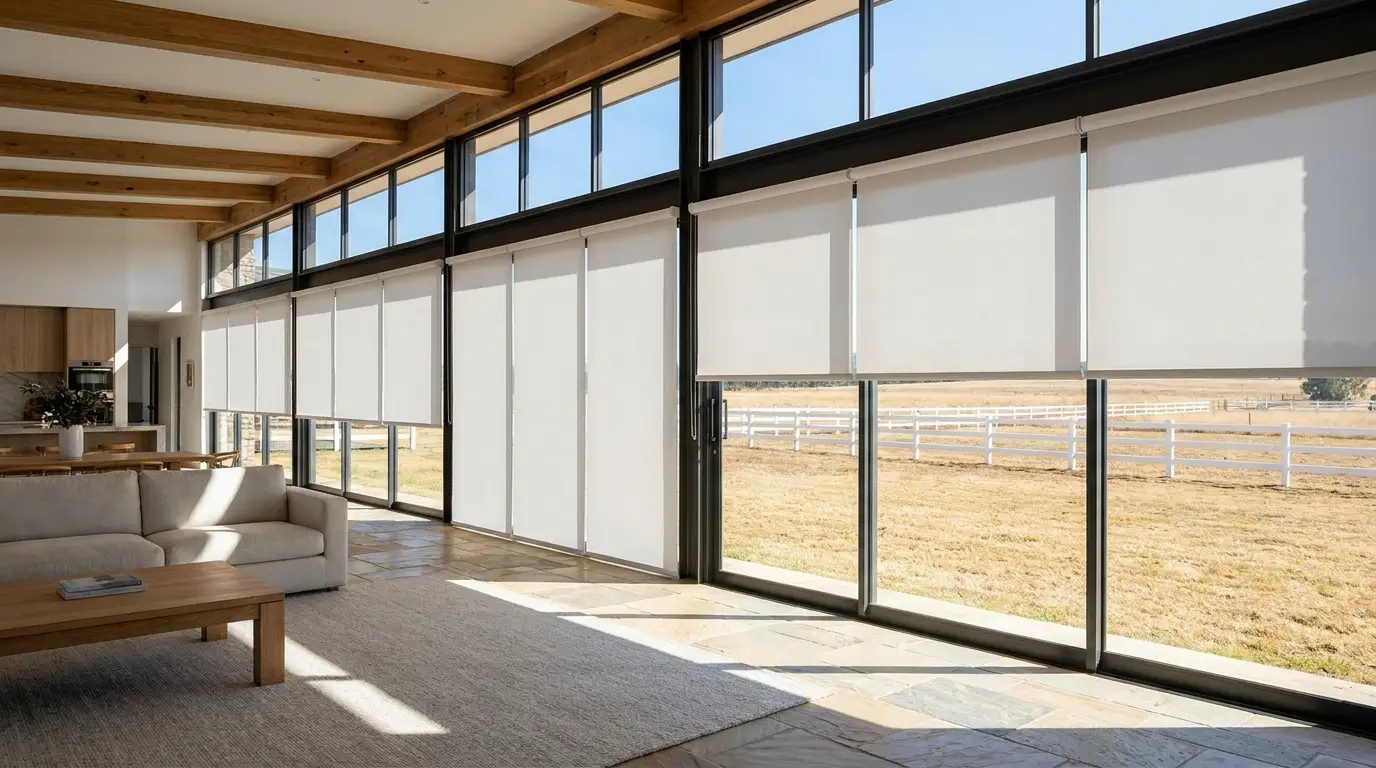
Chartwell houses are built around their glazing. Living areas on the bigger stands run to walls of glass that a single roller simply can't span — roughly 3m of fabric width is the practical ceiling for one tube. Past that point there are two good answers. Split the run, and accept a slim join line where the blinds meet. Or link the blinds to one motor, so four metres of paddock-facing glass rises and falls as a single quiet movement. We'll tell you at the measure which one your wall actually needs; the wrong call is the kind of thing you stare at for years.
Then there's the dust. Anyone living off one of Chartwell's gravel access roads knows the film that settles on every sill between rains — and a flat roller fabric shrugs it off with a damp cloth in a way textured weaves never quite do. High glass over a stair void, a slider you'd need a ladder to reach, a whole elevation you'd rather run on a schedule: that's when a roller stops being a chain product and becomes a button. The motorised blinds & automation page covers what that involves, and what it honestly costs in complexity.
What a roller blind costs out here
Guide only, worked by the square metre installed. Chain or spring rollers in blockout, sunscreen or a light-filtering weave price at R1,000 to R1,600; a straightforward blockout is cheapest and a fine sunscreen on paddock-facing glass, or a double roller stacking both fabrics, dearest. Motorised, the guide is R2,500 to R3,800 with tube motor and control counted.
Two Chartwell notes. Big glass is not what costs most per square metre — the small openings are, because trip, bracket and tube barely shrink, so a minimum applies to anything tiny. Where a wall needs a linked pair on one motor instead of one impossible span, that link is quoted openly. Individual figures follow the free measure, in writing.
Fitted wherever the estate belt puts a window
The measuring tape travels: golf-course glazing in Dainfern, equestrian stands toward Kyalami, family homes in Broadacres & Cedar Lakes, and the newer builds filling out Helderfontein Estate. Different houses, same discipline — each window measured on site, each blind made for exactly that opening.
Fabric swatches mean nothing until they're at your window
A 3% weave looks different against paddock light than it does in a showroom. The free in-home measure brings the sample books to your glass — that's where the choice gets easy.