External Venetian Blinds
The most effective solar control that exists — heat stopped at the glass, before it ever reaches a paddock-facing living room.
Stop the heat before it's your problem
Interior blinds manage heat that's already inside the room. Exterior shading stops most of it at the glass, before it becomes your air-conditioner's problem. On the big north- and west-facing elevations common to Chartwell's larger, more open-plan homes, the difference in indoor temperature is dramatic — it's the same principle European and high-end South African architects use to shade glazed buildings.
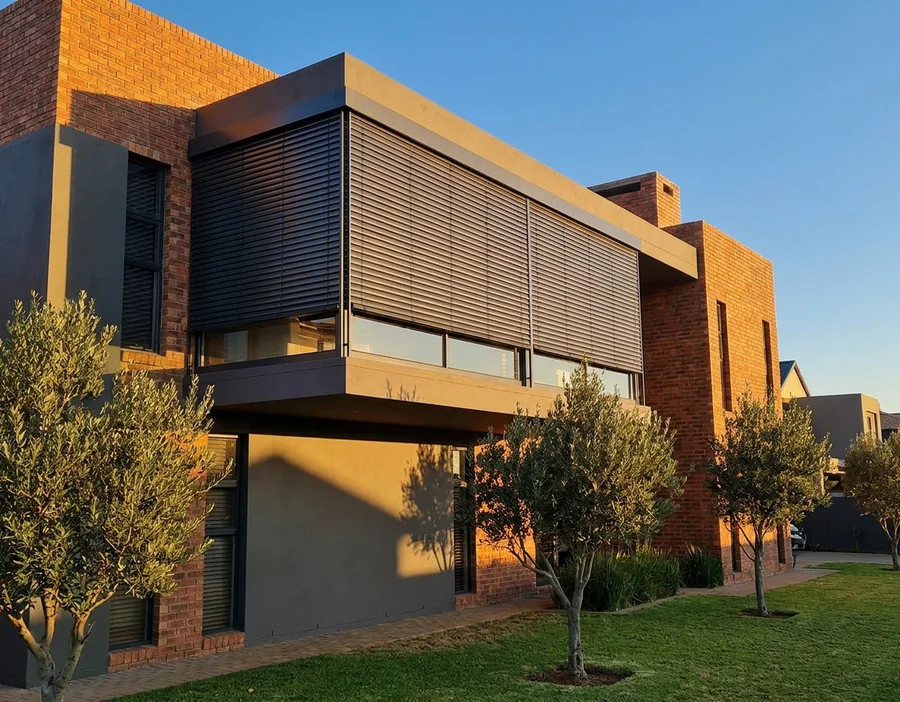
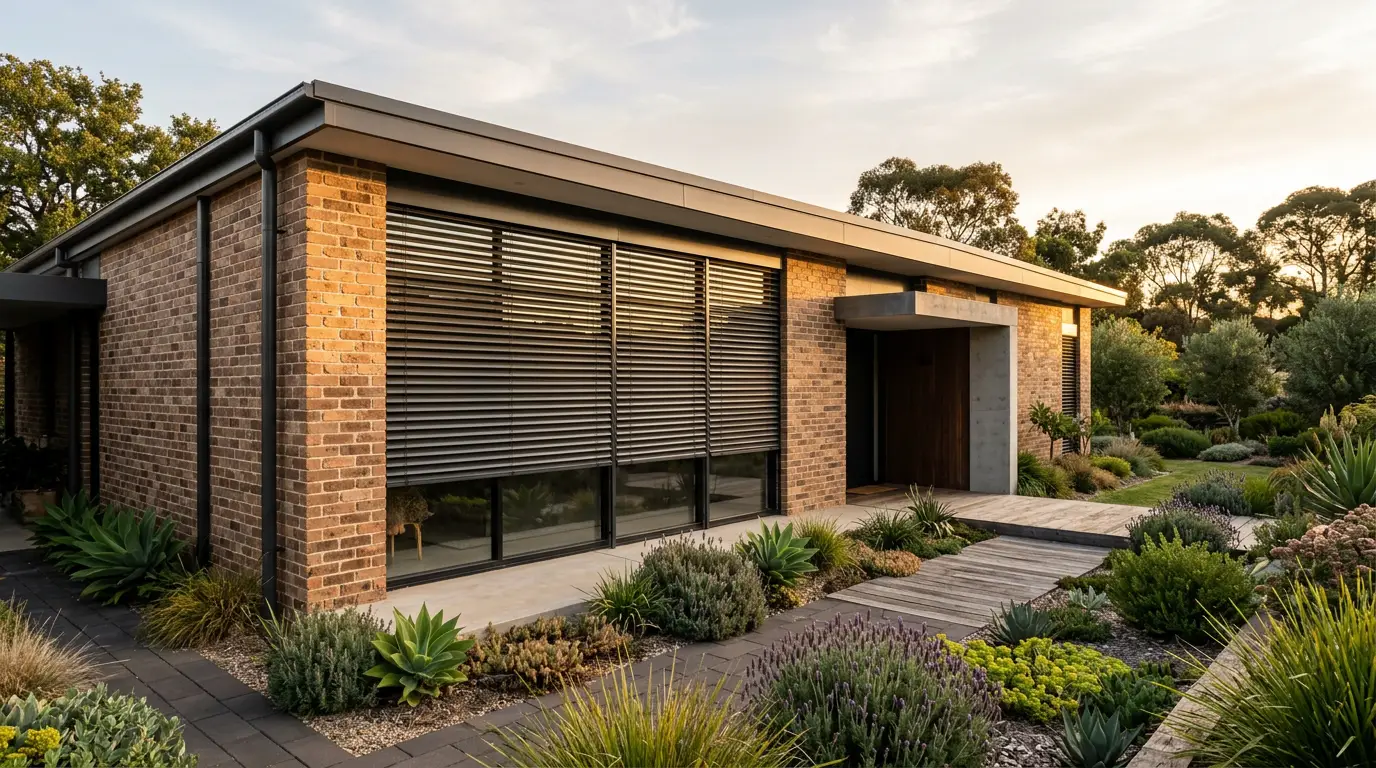
Wide aluminium slats, in the 60-90mm class, run in guided side rails or cables and both tilt and raise, so you can dial in exactly how much light gets through across the day. Powder-coated finishes are engineered for weather exposure, which matters on an elevation that gets the full afternoon sun most of the year.
- Wide aluminium slats (60-90mm class), guided in side rails
- Effectively always motorised, with wind-sensor auto-retract
- Powder-coated finishes engineered for weather exposure
- Tilt and raise independently to dial in shade through the day
- Ideal for hard west and north exposures on open-plan glass walls
Why outside the glass? The physics, and the honest cost of it, are set out in Nothing in the Way, our free Chartwell Light Journal — along with what the late-afternoon hail season means for anything mounted on the outside of the building.
An honest look at the trade-offs
This is a premium spend, and it's a visible change to the facade — if you're on a estate or complex with an aesthetics committee, that's worth checking before you fall in love with a finish. It's not a DIY product: fixing points on the facade and, ideally, planning at design stage give the cleanest result, though retrofit is possible on suitable elevations.
It's best understood as a building improvement rather than window dressing — the right call when a room's "the aircon can't keep up with that glass wall" is a recurring complaint, which we hear often from Chartwell's biggest west-facing living areas. Wind-sensor auto-retract is standard, because an exposed external blind has to protect itself in the gusts and storms this area sees every summer.
What external venetians cost here
Exterior shading is engineered hardware that lives permanently in the weather, and it prices well above anything hung indoors. By the square metre installed, as a guide: crank-operated external venetians run R3,000 to R4,500, and motorised ones, with control and sensing gear, R4,500 to R6,500. Slat width, the guide system and the exposure of the elevation decide the rest.
Three things sit outside that rate. Power for a wired motor is the electrician's line item. Narrow openings attract a minimum, since headbox, side guides and crew time barely change with the glass. And on a smallholding elevation taking the full run of a highveld storm the specification steps up rather than down — better said at the measure than after two summers. The written quote follows that visit.
External venetians on the estate belt's hardest elevations
Wide west- and north-facing glass shows up across Dainfern's fairway-facing homes, Helderfontein Estate's new steel-frame builds and Kyalami's equestrian smallholdings — exactly the elevations external venetians earn their keep on.
Got a wall of glass the aircon can't beat?
We'll assess your elevation and fixing points on-site as part of the free in-home measure.